




 Erik "Nord" Fanger
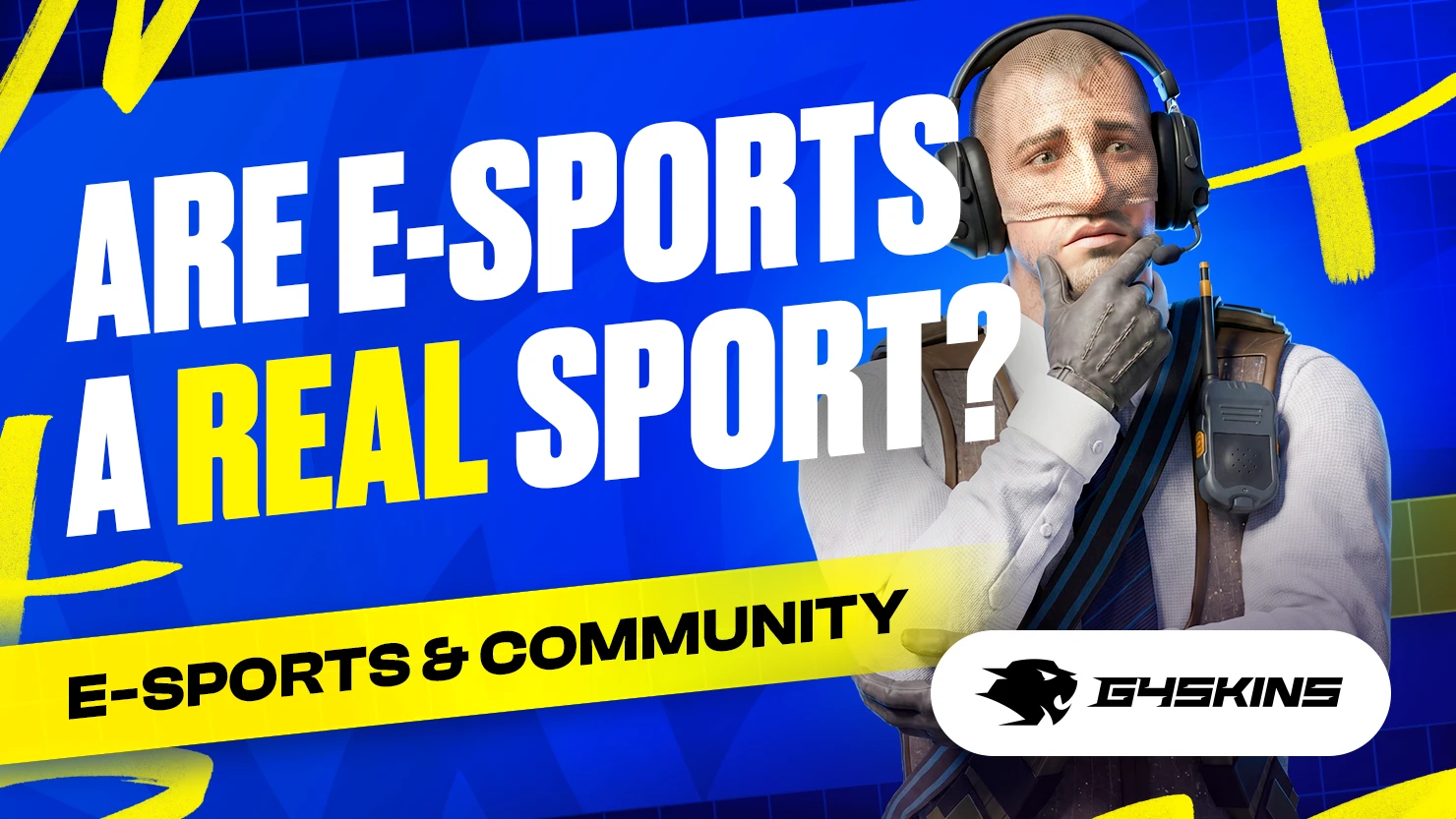
Picture the final round of a CS2 final. You're left alone against two opponents, the bomb is ticking, and every decision could end the match. You have to combine information from your team, predict enemy positions and execute a precise movement. For the viewer it's a dozen seconds of tension. For the player it's also a test of skills built through training.
Is e-sport a sport? It shares many features of athletic competition, and some national legislation allows for competition based on intellectual activity. There is, however, no single definition that settles the discussion across every country and institution.
It's worth separating three questions: the nature of the competition, its legal status, and its presence on the Olympic programme. Research on players helps us understand the demands of the game, but on its own it doesn't determine what should be called a sport.
Let's look at the arguments, the training and the rules of organised competition. At the end we'll return to the most important distinction: why recognising e-sport as a sport doesn't mean every hour in front of a computer counts as athletic training.
What is e-sport and how does it differ from casual gaming?
Organised competition is the foundation
So, what is e-sport in practical terms? It's organised competition in video games, conducted according to defined rules. It spans different titles, formats and levels of play.
It isn't limited to professionals under contract. An amateur tournament can also be an esports event, much as local sporting competitions don't require national team participation.
What matters most is the goal of the competition, the rules and the ability to determine a result. Prize size and viewer numbers don't decide this on their own.
Recreation and competition can overlap
Playing for fun isn't less valuable simply because it doesn't constitute professional training. You can launch CS2 after work, meet friends on a server or develop your skills with no intention of joining a team.
Not every such session is esports in the strict sense, though. The mere presence of a ranking system also doesn't make an activity professional.
The difference lies primarily in purpose and organisation. Preparing for competition involves a plan, analysis and work on specific elements, rather than simply playing more matches.
Esports isn't one discipline with identical demands
CS2, League of Legends and strategy games test different sets of skills. Communication, decision tempo and control requirements all look different.
That's why findings from research on one game shouldn't automatically be applied to all players. This concerns reaction time, number of actions performed, stress levels and training methods alike.
Is e-sport a sport by definition?
Much depends on the meaning of physical activity
Some definitions of sport place heavy emphasis on physical exertion and the development of fitness. Others allow a broader reading that covers intellectual competition and precise motor skills.
Esports does require bodily involvement: operating devices, hand-eye coordination and performing exact actions. In a typical computer game, however, this isn't the same kind of load as running, swimming or cycling.
The dispute therefore also concerns how broadly we define sport, not whether players genuinely possess skills.
How is esports a sport in practice? The similarities are clear
Esports competition contains many elements familiar from traditional sport, which is largely why is esports considered a sport by a growing number of institutions.
| Criterion | How it appears in esports | What's worth clarifying |
| Competition | Players or teams contest a result | Can be amateur or professional |
| Rules | Regulations define play and infringements | Details differ between games and organisers |
| Skills | Decisions, precision, teamwork and game knowledge matter | Their weight depends on the title |
| Training | Players drill mechanics, tactics and communication | Hours alone don't describe preparation quality |
| Organisation | Leagues, tournaments, referees and teams exist | Not every scene has the same level of professionalisation |
| Exertion | Cognitive, motor and stress responses occur | These don't equate to high energy expenditure |
| Institutional recognition | Some laws and bodies cover esports | There's no single status worldwide |
Packed arenas and high salaries demonstrate popularity and business scale. In themselves, though, they aren't a definition of sport.
The chess comparison helps but has limits
Chess shows that the debate about sport needn't be confined to muscular strength and endurance.
As in many esports titles, anticipation, analysis and maintaining focus all matter. CS2 additionally requires rapid execution of decisions in real time.
Not every game tests the same kind of reflex, however, and resembling chess doesn't automatically mean an identical legal or institutional status.
Is e-sport a sport under national law?
Polish legislation accounts for intellectual competition
Polish sports law doesn't restrict its definition purely to physical activity. Article 2 paragraph 1a also covers competition based on intellectual activity aimed at achieving a sporting result.
This provides a basis for including suitably organised esports competition within the statutory concept of sport. It doesn't mean, however, that every form of playing a computer game automatically meets those conditions.
It's worth distinguishing such a classification from the recognition of a specific organisation, federation or competition programme.
Sporting status doesn't automatically grant every entitlement
The ability to apply for a scholarship, funding or other support depends on the rules of the particular programme and on meeting its conditions.
Calling yourself an esports athlete isn't enough to receive benefits. Likewise, simply taking part in a tournament doesn't determine a player's form of employment or insurance.
The safest approach is to consider the definition of sport separately from the requirements attached to any specific entitlement.
What does research say about the exertion of esports players?
Competition can trigger a stress response
Research shows that heart rate and other physiological parameters can change during competition. The response depends, however, on the participants, the game and the measurement conditions.
In a study published in 2022 covering 32 university-age men competing in Overwatch, the average heart rate during a match was roughly 107 beats per minute. No significant change in salivary cortisol concentration was found between measurements before and after play.
That's one example, not a universal result for all esports players. It shouldn't be transferred directly to a professional CS2 final.
A high heart rate doesn't mean marathon-level exertion
Heart rate can rise under the influence of emotion and stress. The measurement alone therefore doesn't show that a player seated at a computer is doing work comparable to a runner.
Assessing energy expenditure requires appropriate measurement methods. It can't be inferred solely from an exciting match or the presence of adrenaline.
The body's response confirms that competition can be demanding, but it doesn't prove esports is identical to endurance sports.
Reflexes are only part of good play
In CS2, effectiveness also depends on crosshair placement, predicting enemy positions and information passed on by the team.
A player may react more effectively because they prepared for that specific situation in advance. That doesn't necessarily mean an exceptional advantage in a simple stimulus reaction test.
That's why phrases like "superhuman reflexes" sound impressive but explain little. A better description covers the combination of experience, decision-making and executing the movement.
Actions per minute isn't a shared measure across all games
The actions-per-minute metric can be useful in some strategy titles. It isn't, however, a universal measure of a player's level or exertion.
In CS2, extra unnecessary movements aren't an advantage. What often counts is performing one correct action at the right moment.
There's therefore no basis for presenting 400 to 500 precise actions per minute as a standard applying to all professional players.
What does a CS2 player's training look like?
Mechanics should serve a specific purpose
Training can cover recoil control, stopping movement before shooting, crosshair placement and grenade lineups.
What matters is whether the drill addresses a problem visible in matches. If you regularly lose duels because of bad positioning, simply extending your aim training may not solve the cause.
From an expert standpoint, preparation is better judged by the quality of decisions and the repeatability of execution than by the number of hours spent on a server.
Tactics and communication require teamwork
A team prepares ways of taking space, trading eliminations, defending bombsites and reacting to opponent movements.
Communication also matters: passing on the right information, keeping it concise and delivering it at the moment it reaches teammates usefully.
Watching replays helps establish whether the problem was mechanical, a decision, missing information or an inconsistent plan across the whole team.
Preparation outside the game supports the player
Physical activity, recovery and a properly arranged workstation can all be part of preparation. Not every team, however, has a physiotherapist, psychologist or extensive support staff.
Nor should the classification of esports be justified solely by the fact that players go to the gym. Supplementary training describes preparation for competition, not the nature of the game itself.
Pro tip: after a difficult match, pick one recurring mistake and plan a specific drill for it. That's more useful than a general resolution to "play better" next time.
How to turn an ordinary session into structured practice
- Choose one element you want to improve.
- Check in a replay which situations produce the mistake.
- Select a drill matching that specific problem.
- Test the correction during a game.
- Judge the result by your decisions and execution, not only the match outcome.
- Plan a break and end the session once your play stops being attentive.
Is esports a job?
Professional play can be an occupation
Players can receive remuneration for representing an organisation, training, competing in tournaments and promotional activity.
The scope of duties and the method of settlement depend on the contract. Prize splits, travel conditions and additional benefits aren't identical at every club.
You can't assume, therefore, that every professional player has an employment contract, paid contributions and the same package of protections.
Earning money doesn't settle whether something is a sport
Remuneration confirms the professional character of an activity, but it isn't a standalone criterion for sport.
Amateur competition can be sporting in character without salaries or sponsors. Meanwhile, many other demanding professions aren't sports despite high earnings.
Salary tables therefore don't replace an analysis of the rules, skills and nature of the competition.
Age doesn't set a single career end date
Career length is affected by results, health, motivation, role in the team and the market situation.
There's no single biological threshold after which a player automatically loses the ability to compete. Nor should every retirement before thirty be explained solely by changes in reaction time.
Experience, communication and game understanding also matter, and requirements differ between roles and titles.
Is esports an Olympic sport?
IOC-backed events aren't the same as the Olympic programme
The IOC has undertaken initiatives concerning virtual competition, including the Olympic Esports Series and the Olympic Esports Games project.
This doesn't mean, however, that all esports titles have been included in the programme of the summer or winter Olympic Games. CS2 didn't gain such status simply because those projects exist.
The IOC recognising a given initiative and a specific game appearing on the Olympic programme are two different matters.
Earlier Olympic Esports Games plans have changed
On 30 October 2025, the IOC announced the end of its earlier cooperation with the Saudi Olympic and Paralympic Committee on the Olympic Esports Games.
A new approach and partnership model were announced as being under development. Older announcements about the host and schedule shouldn't therefore be treated as fixed.
As of October 2026, referring to the project alone doesn't justify the claim that esports as a whole has become an Olympic sport.
Absence from the Games doesn't close the debate about sport
The Olympic programme covers selected disciplines and events. It isn't a complete list of every activity recognised as a sport.
The argument "it isn't at the Games, so it isn't a sport" is therefore too simplistic. Equally simplistic is the claim that IOC patronage automatically settles the status of any given game.
What sets esports apart from many traditional disciplines?
The publisher controls the game and its development
Esports rests on a digital product owned by a specific company. Updates can change rules, balance and the conditions of play.
Decisions on licensing, infrastructure and tournament organisation matter too. That's a meaningful difference from disciplines whose basic form doesn't depend on a publisher maintaining a single game.
This doesn't negate the sporting character of the competition, but it does affect its organisation and independence.
Integrity requires technical oversight
In esports, anti-cheat protections, hardware and settings checks and procedures for server problems all play an important role.
Fair play rules aren't something you can simply declare. They have to be enforced by the organiser.
It's precisely the credibility of the result that allows competition to be taken seriously, regardless of the size of the scene.
Skins change appearance, not a player's skill
Personalising your inventory can be an enjoyable part of playing CS2. It doesn't, however, replace training, communication or analysis.
A skin doesn't increase weapon damage, doesn't improve accuracy and doesn't make a player a professional.
G4Skins can accompany an interest in the cosmetic side of the game, but it's worth clearly separating the look of your inventory from the competencies needed in competition.
Is e-sport a sport? The key takeaway
The answer requires defining the context
The case that esports is a sport rests on solid ground: organised competition, rules, developed skills and systematic preparation. Polish law also accounts for intellectual competition, which provides a basis for viewing suitable events this way.
We don't need stories about exertion equal to a marathon or about "superhuman reflexes" to appreciate the demands placed on players.
So we return to the distinction from the start: the sporting character of esports doesn't mean every gaming session is training, nor that sitting at a computer replaces physical activity.
Is e-sport a sport? It can be treated as such within a broad understanding of competition, while keeping in mind the differences between definitions, legislation and Olympic status.
If you want to understand this competition better, watch a CS2 match with your attention on decisions, communication and teamwork. Then pick one element to improve in your own play and build your knowledge with G4Skins content.
The status of esports is only part of a wider discussion, though. An equally common question is whether the industry can sustain its current pace of growth and how it will fund itself in the years ahead. If you want the data, forecasts and real challenges facing the scene, take a look at Does esports have a future? Industry trends and growth.
FAQ - common questions about the status of esports
Is esports a real sport?
It has many features of sport and can be classified as such. The answer depends, however, on the definition adopted and on the legal and institutional context.
Is e-sport a sport legally in Poland?
Polish law accounts for intellectual competition aimed at a sporting result. This provides a basis for covering suitably organised esports competition under that concept.
Is every session of CS2 esports?
No. Recreational play, training and participation in organised competition are different forms of activity.
Does scientific research prove esports is a sport?
Research describes the demands and the body's responses. It doesn't on its own settle the definitional question of status as a sport.
Does a player burn as many calories in a match as a marathon runner?
There's no basis for such a generalisation. A high heart rate caused by stress doesn't mean comparable energy expenditure.
Is esports an Olympic sport?
That status can't be attributed to esports as a whole. IOC initiatives don't automatically mean CS2 or other popular titles are on the Olympic programme.
Is esports a job you can do full time?
Yes. Professional play can be a main occupation and source of income, though employment terms and benefits depend on the specific contract.
Does an esports career have to end before thirty?
No. There's no single binding age limit. Form, health, experience and professional circumstances all matter.
Does gaming replace physical activity?
A typical seated session of CS2 isn't a substitute for regular movement. A player's preparation should also account for rest and functioning outside the game.
Do expensive skins help you win?
They don't increase weapon statistics or player skill. They're an element of personalisation, and results depend on preparation and in-match decisions.


_1.webp)